Designed for Multi-Table
It’s been a minute since the last post. I wanted to come back with something worth reading, and May gave me one.
I’d been wanting to tear the interface down and start over for a while. I didn’t like it. Most poker apps put their design budget into mobile and stop there — and yes, we did mobile work too — but the part I personally needed to fix was the multi-table experience. I always hated opening four browser windows to play four tables. So before any of this work started, I wrote down some strict requirements about how it had to feel, and we built around those.
This is what we came up with, and the rest of what landed along the way.
What We Came Up With
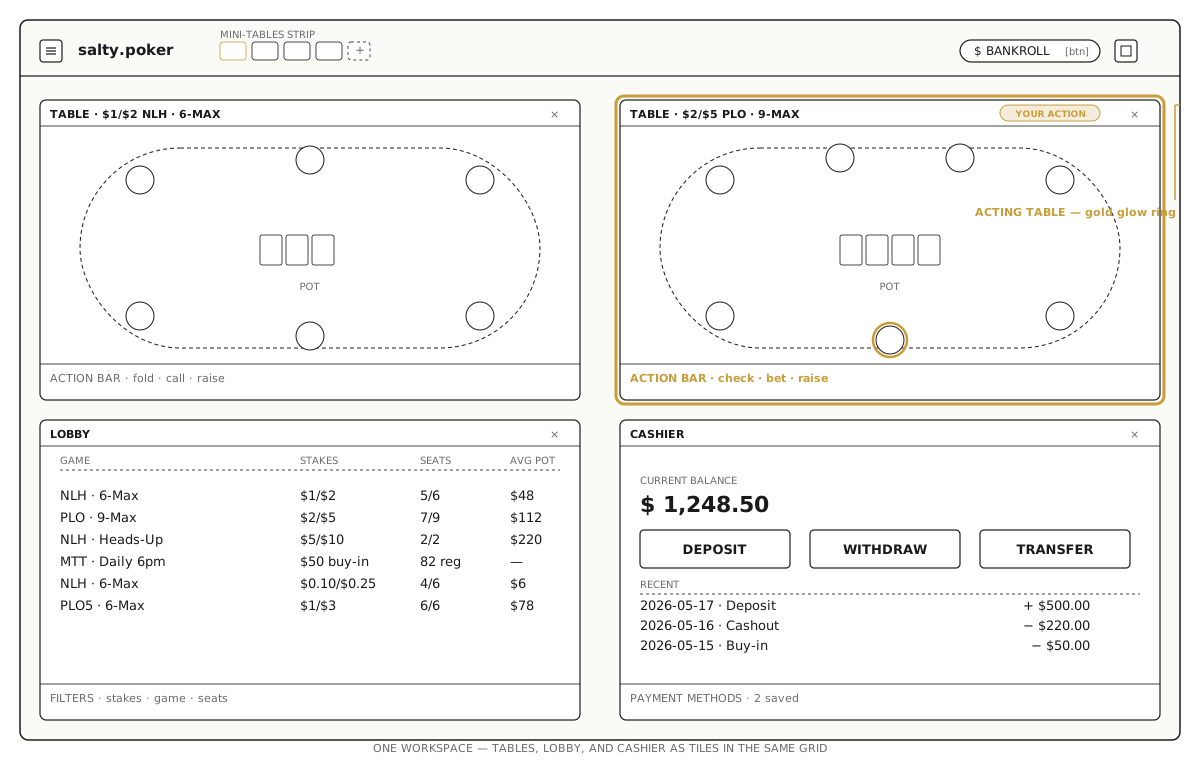
One persistent workspace, built out of tiles. Tables, lobby, cashier, hand history — all live in the same grid. You drag them around, the layout sticks across sessions, and old page links still work; they just open the right tile instead of taking you to a separate page.
The target we’re building toward: 16 live tables in a single window, no extra windows, no fan-roaring laptop.
The workspace, end-to-end. Tables, lobby, and cashier all live as tiles in the same grid. The acting table gets a gold ring so you always know which one’s on the clock.
Five technical changes are what move 16 tables in one window from tagline to realistic target:
One GPU context for the whole page. Every table on screen now shares a single renderer instead of each spinning up its own. That’s the unlock — modern browsers cap how many GPU contexts a page can hold, and the old one-per-table model would tap out long before you got to 16. Laptops, older machines, and mid-tier mobile all hold up beautifully now with several tables open, and the headroom keeps going up.
Each tile picks its own orientation. Portrait or landscape, decided by what fits. Four tables on a wide monitor stay landscape. Eight on a tablet flip to portrait when it makes sense. You don’t have to think about it.
A per-tile action bar. When a table needs you, you act on that table — exactly where your eyes already are.
An acting-table glow ring. The table that’s on the clock is the one that’s glowing. Hard to miss, easy to ignore until it matters.
Atomic seat claims. Behind the scenes, but it counts: when two players hit sit on the same seat at the same instant, the platform now resolves it cleanly. No double-claims, no surprises.
And Here’s the Rest
The table itself got a redesign while we were in there. Bigger avatars. Each seat has its own colored ring. The active player gets a gold ring on top of their color — distinguishable by shape, not just by hue, so colorblind players don’t lose the cue. Stack labels are a brighter green that pops against dark felt. Nameplates are cleaner. Seat geometry was tightened up too — tables are now mathematically even around the felt, with bet labels at consistent offsets toward the pot. The kind of thing you don’t notice once it’s right, which is the point.
We also shipped a dark table theme alongside the original. Charcoal felt, a three-band metallic silver rail, faint geometric web lines connecting every seat, floating name and stack text — no pill background. Clubs choose their own theme. If your club is on dark, you’ll see it next time you sit down.
A bunch of smaller wins came along for the ride:
- Click-to-sit. Tap the “+” on any empty seat. The buy-in dialog opens with that seat already reserved.
- Hamburger menu replaces the bell. Profile, cashier, hand history, help — all one tap from the header.
- Bankroll chip is a button now. Tap it, the cashier tile opens. Saves a step.
- Mobile got room to breathe. On narrow screens the brand hides so the mini-tables strip and the “+” button have the space they need. Native fullscreen is a tap away on the workspace header.
What’s Next
The workspace foundation is in. Next up: registration and the game mechanics themselves. More on both when they’re ready.
For the engineering side of how we work — spec, sessions, the architect / agent split — I write that up on The Salty Korean.
Stay salty.
The Salty Korean
Founder of the Salty Poker Network. Writing about Texas poker, platform building, and the future of online poker.Read more at The Salty Korean.